How to start a dairy farm in Sikkim (2026): investment, profit and licences
A dairy farm in Sikkim needs about ₹12.3 lakh–₹18.8 lakh to set up, depending on the format. Run well in a city like Namchi, it typically nets ₹36,500–₹54,500 a month. The numbers below are India-wide research rescaled to Sikkim's own wages, shop rents, power tariffs and street prices.
How much investment do you need in Sikkim?
- Cheapest start

Cooperative pourer
10 crossbred cows, shed and cans. Most milk goes to the society, a few neighbours buy direct. You do the rounds yourself.
Setup cost₹12.3 lakhSuggested budget (with working capital): ₹12.5 lakh Doorstep milk rounds
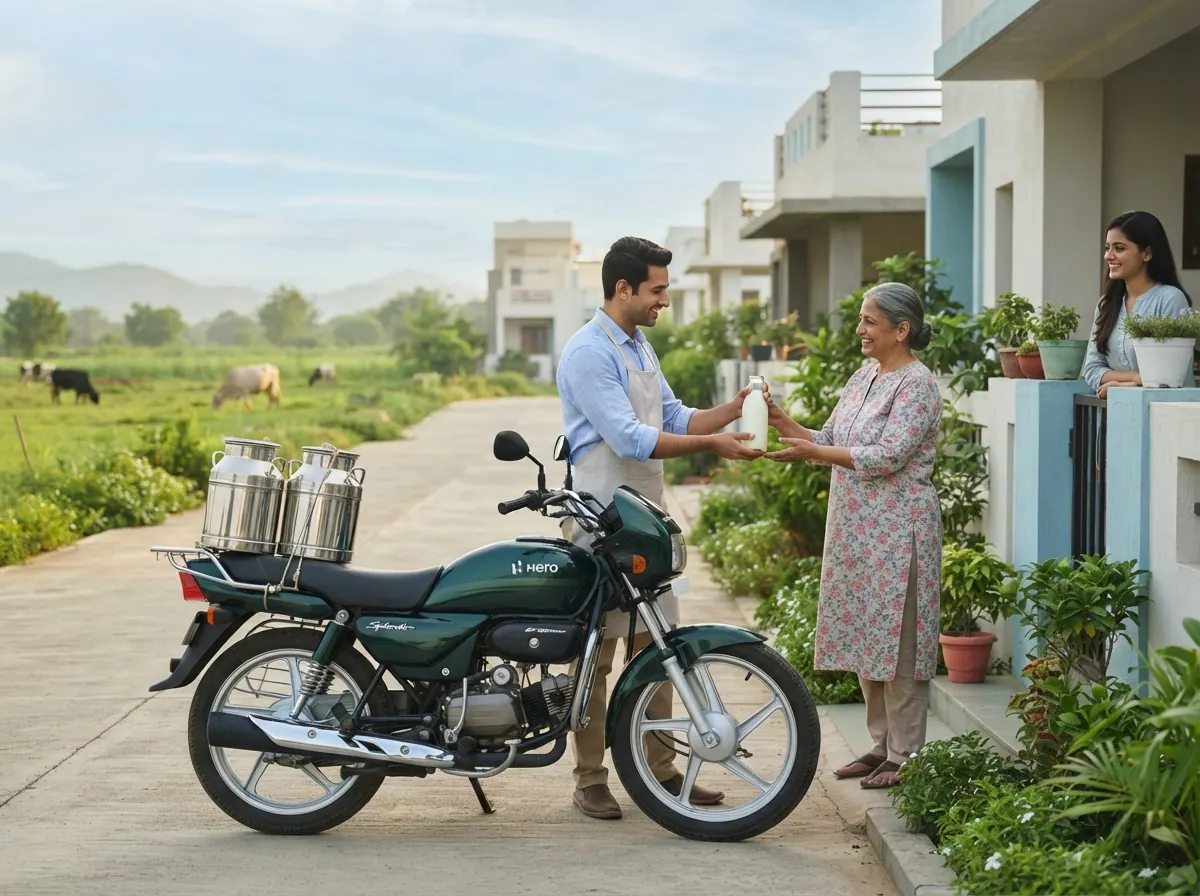
Same herd plus a bike, electric chaff cutter and milking machine for morning and evening rounds.
Setup cost₹13.9 lakhSuggested budget (with working capital): ₹14.2 lakh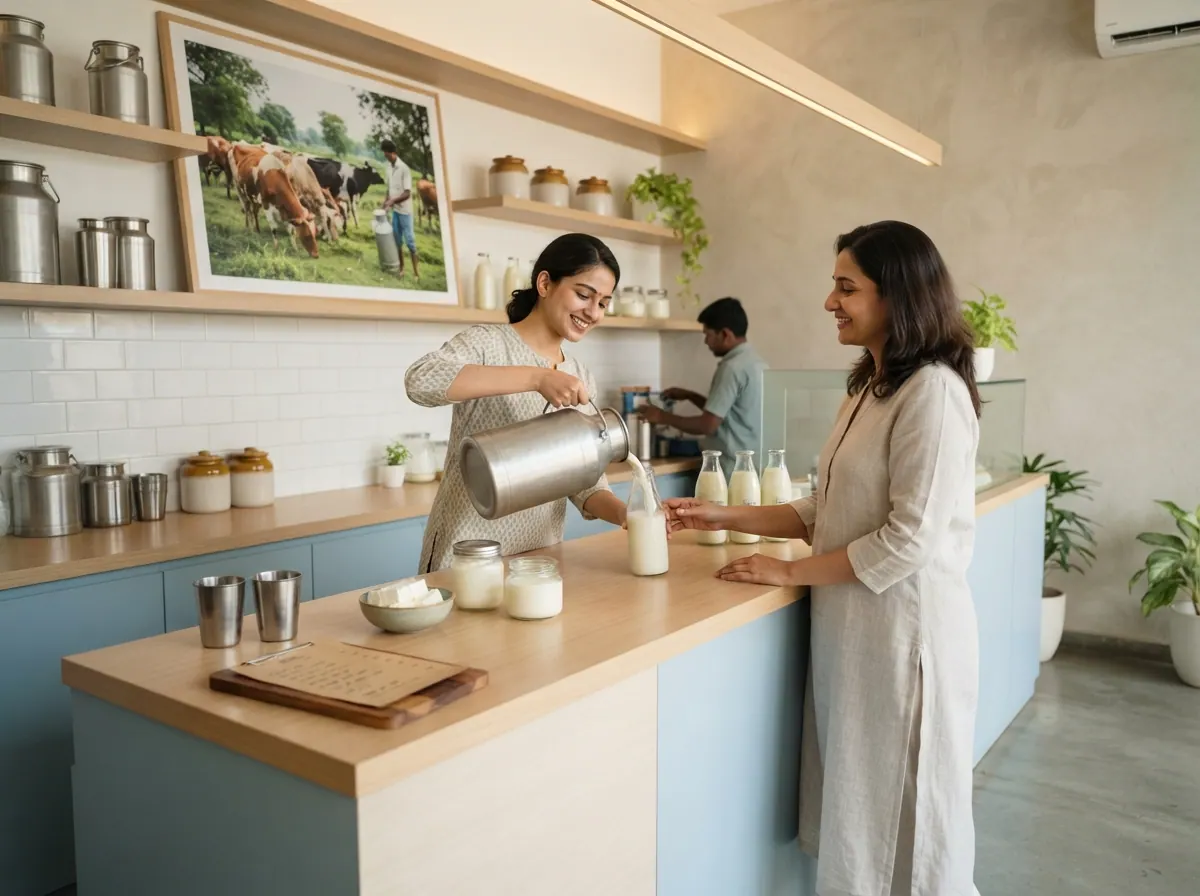
Milk parlour counter
Herd plus a shop with a chiller, deep freezer and paneer counter. Walk-ins and subscriptions.
Setup cost₹18.8 lakhSuggested budget (with working capital): ₹19.1 lakh
Running this business: the situations you will face
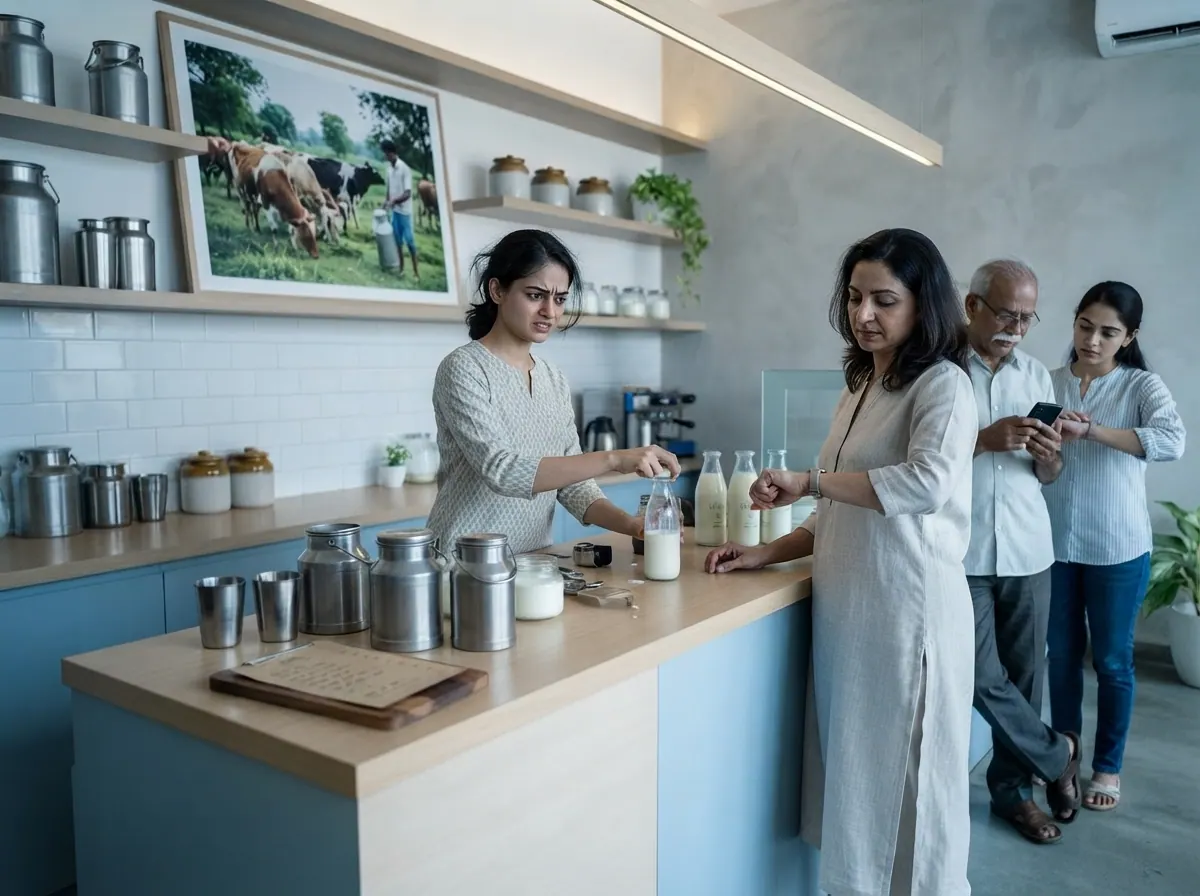
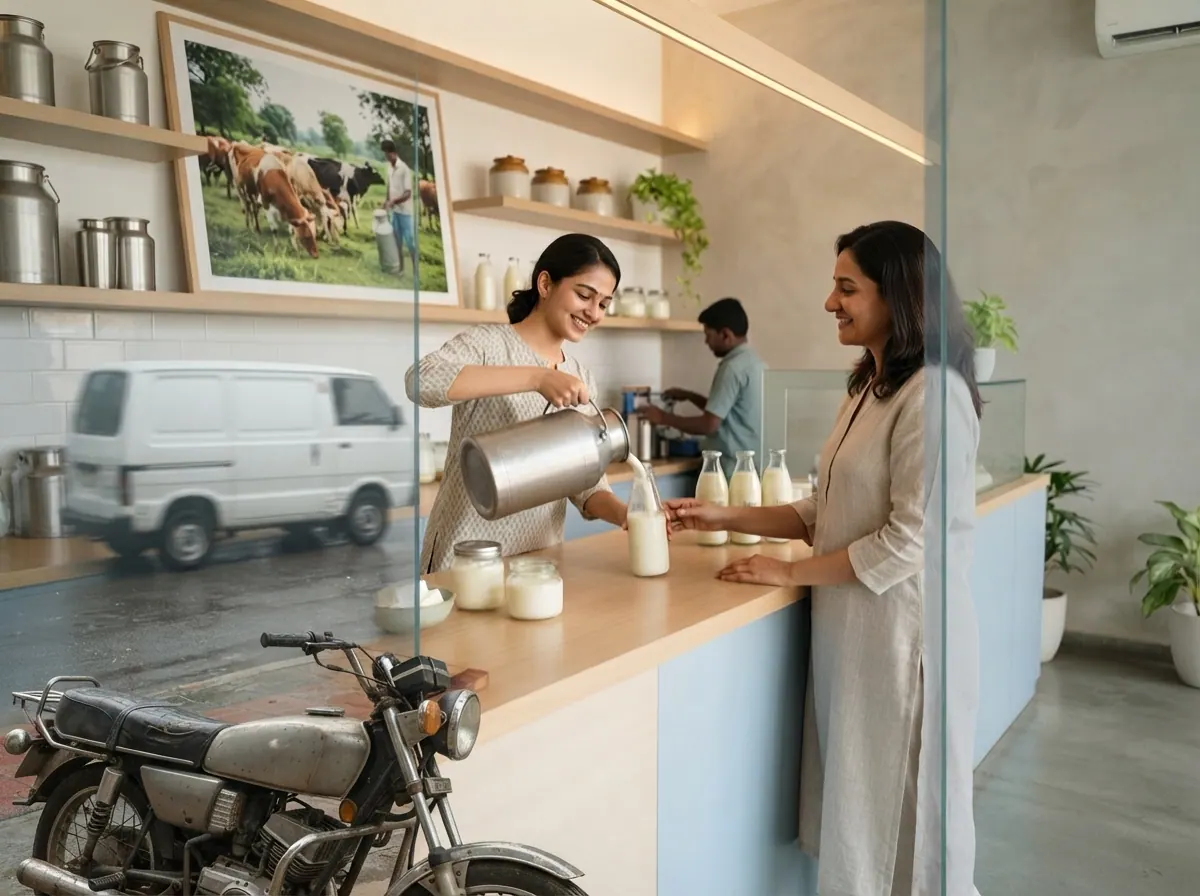
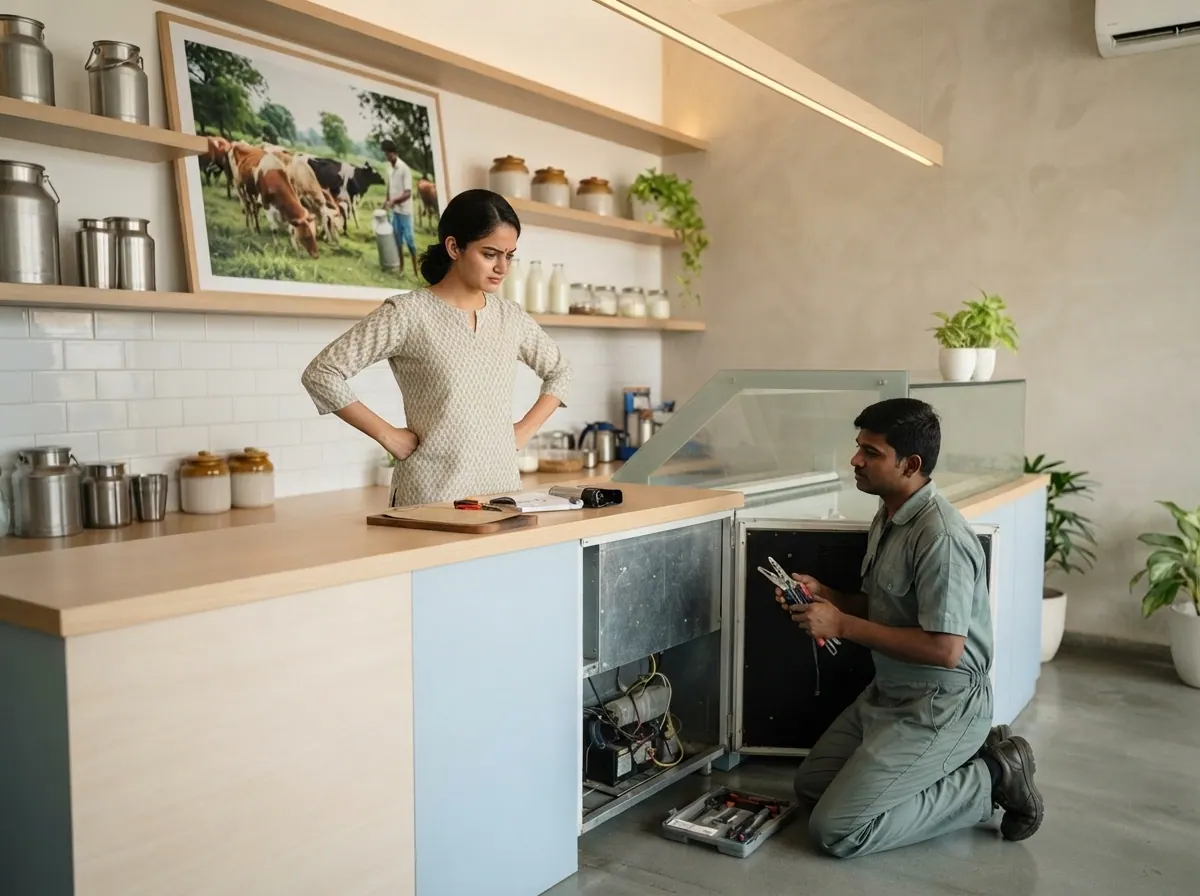
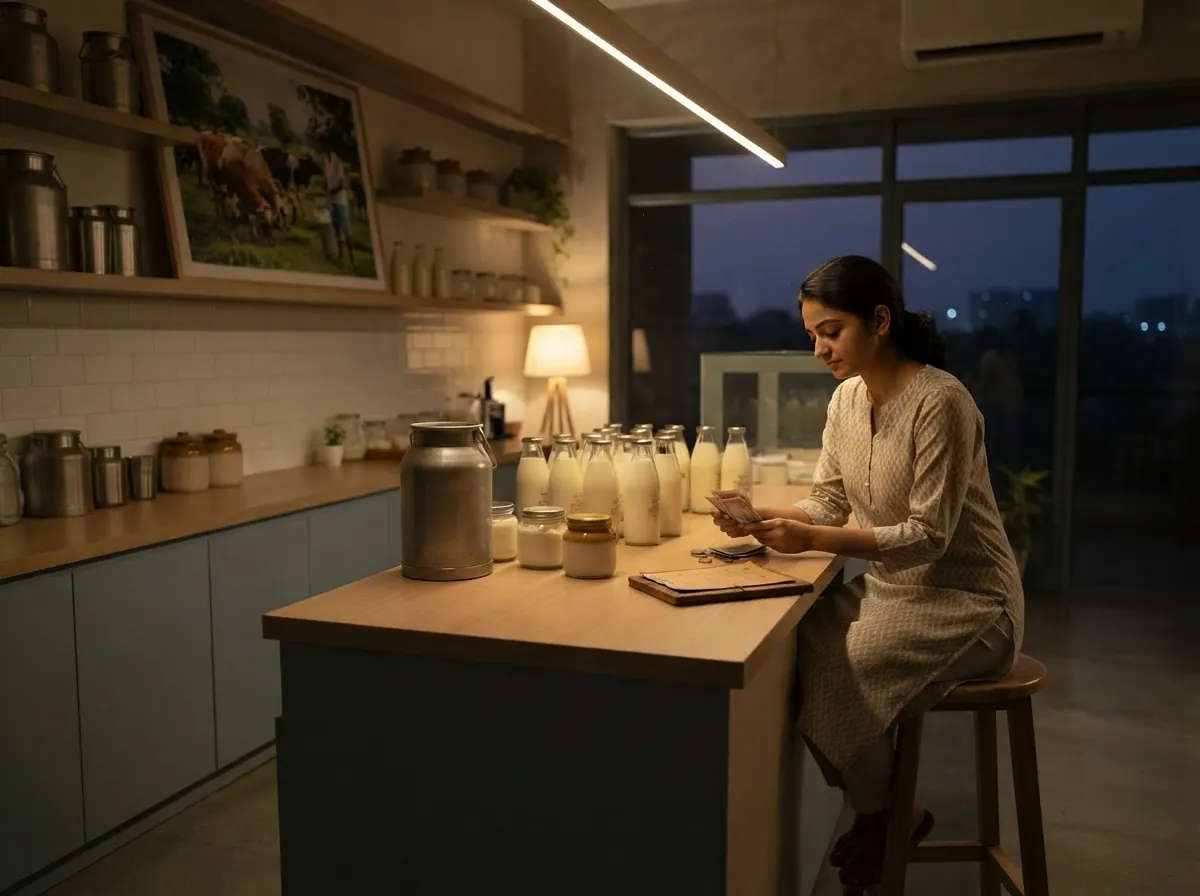
Scenes from the simulator: rush hours, rain, inspections, power cuts, record days.
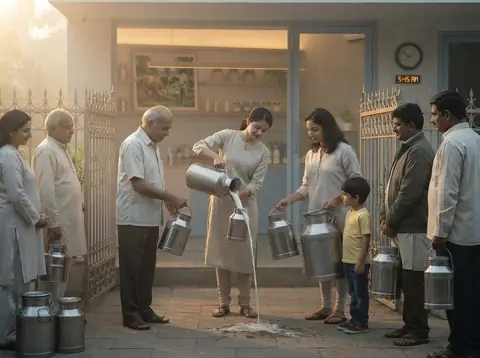
Dairy farm during the peak-hour rush, owner and helper serving a crowd 
Dairy farm on a slow afternoon with no customers 
Dairy farm in heavy monsoon rain 
Dairy farm in a summer heatwave 
Dairy farm decorated for Diwali with a festive crowd 
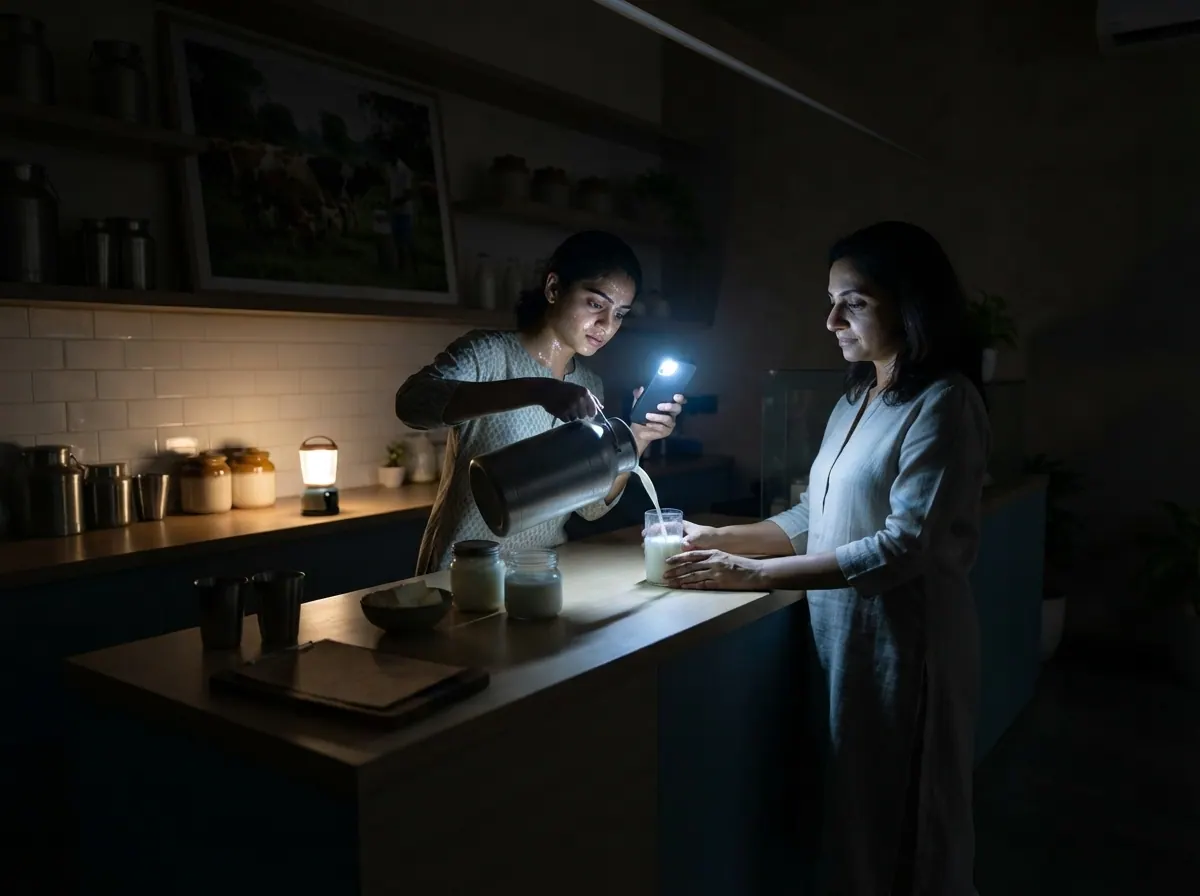
Dairy farm during a power cut at night, lit by a torch 
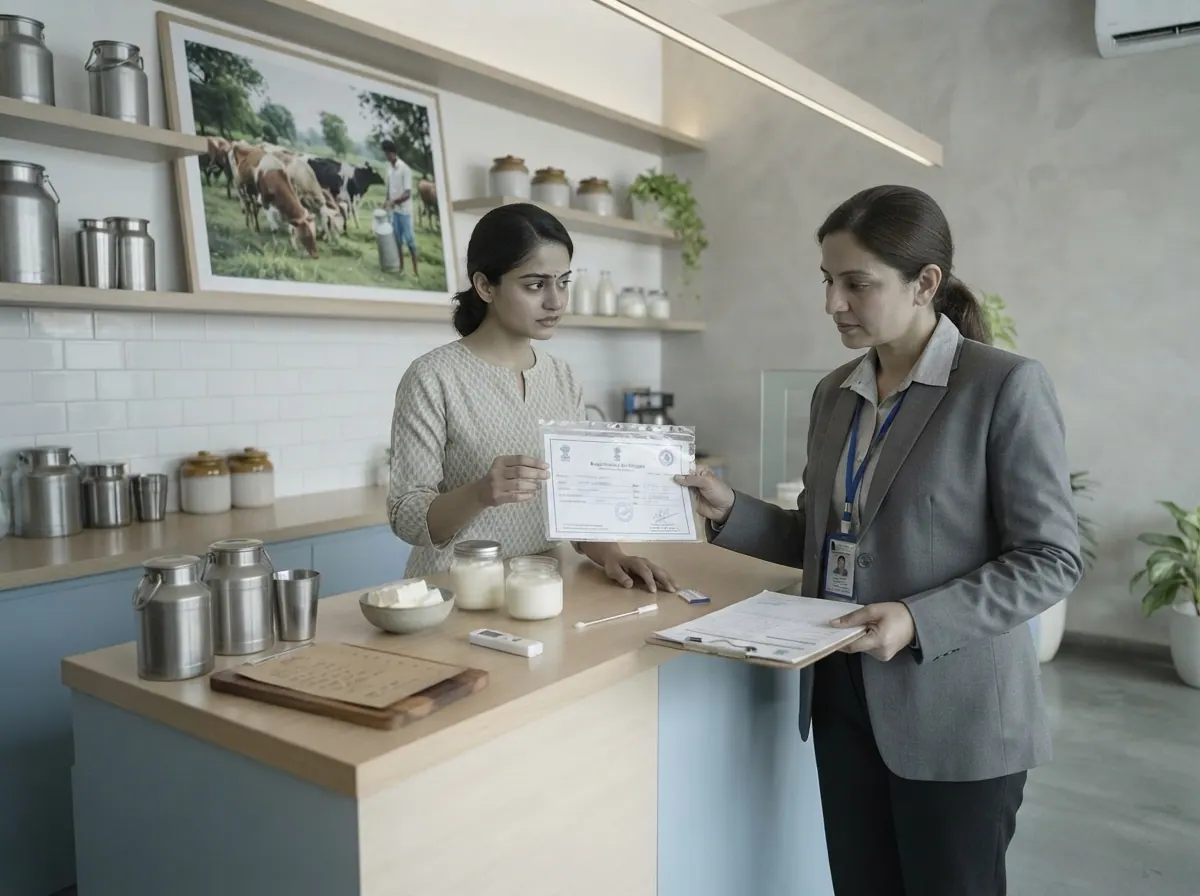
Dairy farm with a government inspector checking licences 
Dairy farm receiving a supplier delivery, owner checking the bill 
Dairy farm short-staffed, the owner working alone 
Dairy farm as a new competitor opens nearby 
Dairy farm with a customer asking for credit (udhaar) 
Dairy farm with an unhappy customer complaining 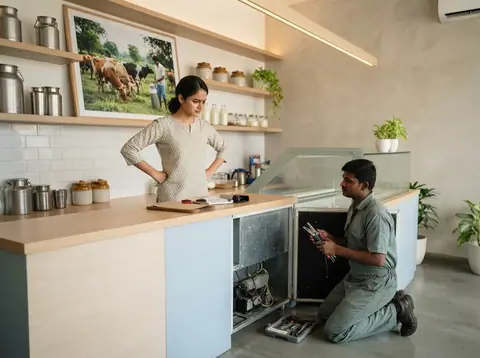
Dairy farm during an equipment breakdown and repair 
Dairy farm after a record sales day, owner counting cash 
Dairy farm closing after a slow sales day
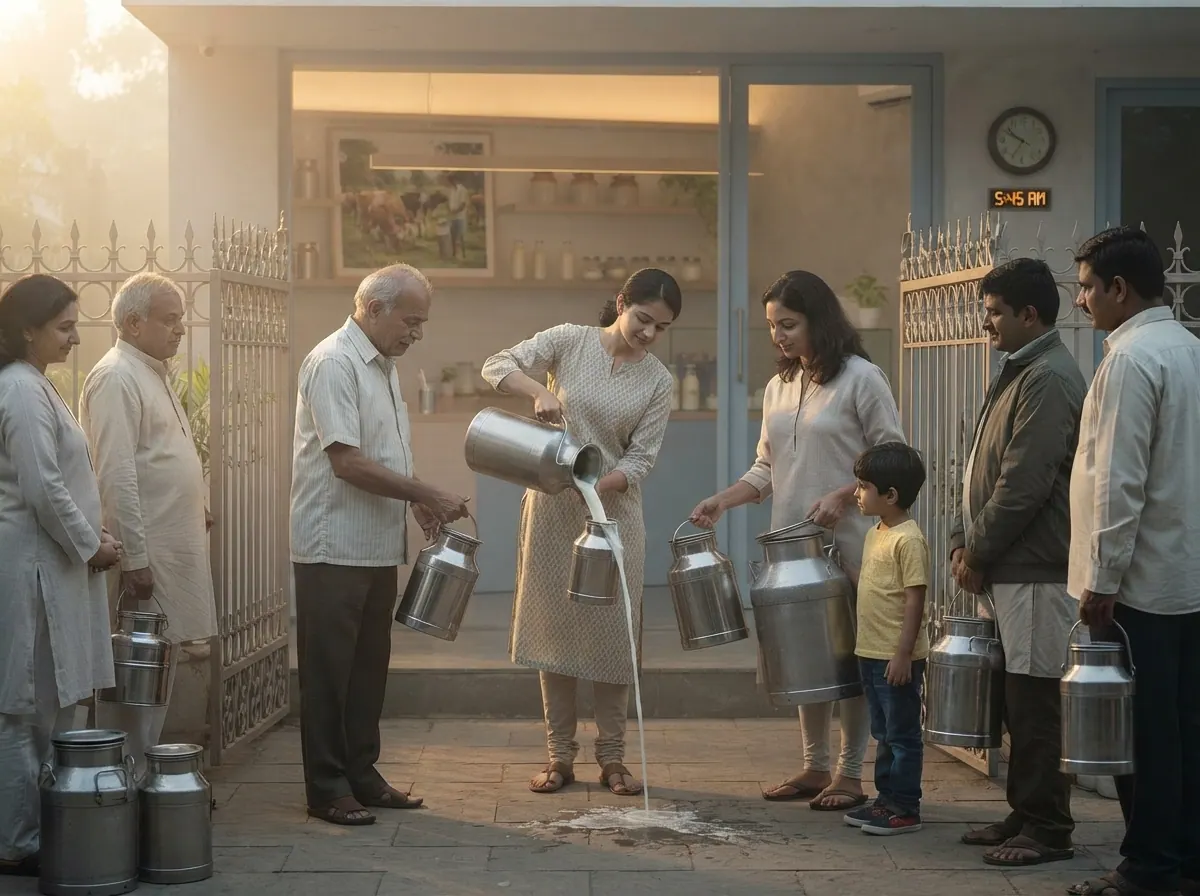








How to start a dairy farm, step by step
- Choose your format and budget: Start with Cooperative pourer: about ₹12.3 lakh to set up, or ₹12.5 lakh with working capital.
- Pick the location: Compare the rent with the number of customers who pass by, at the hours you will be open.
- Get your licences: Commonly needed: FSSAI registration for milk sale, local animal-keeping permission, Kisan Credit Card for working capital. Rules vary by state and city, so confirm with your municipal office.
- Arrange stock, staff and prices: Check local prices first, and keep money aside for the first months of rent, wages and stock.
- Plan for the risks: Watch for: lumpy skin disease and FMD, heat stress cutting yield, fodder price spikes, low cooperative prices.
- Practise before you invest: Run it day by day in the free simulator to see where the money goes.
How much profit can you make in Sikkim?
A well-run dairy farm in Sikkim typically nets ₹36,500–₹54,500 a month in a mid-size city: about ₹46,000–₹72,500 in the metro and ₹7,500–₹22,000 in a small town. A casually run one can make far less or lose money.
| City | Net profit per week | Net profit per month |
|---|---|---|
| Gangtok | ₹10,598–₹16,781 | ₹46,000–₹72,500 |
| Namchi | ₹8,418–₹12,626 | ₹36,500–₹54,500 |
| Mangan | ₹1,699–₹5,097 | ₹7,500–₹22,000 |
Ranges are for a well-run business of the typical format in each city size, from public sources and estimates. Your results depend on location and how you run it.
What changes in Sikkim
The researched local factors that move this business’s numbers.
| Here | India | vs India | |
|---|---|---|---|
| Minimum wage, monthly | ₹13,000 | ₹12,500 | +4% |
| Unskilled day wage | ₹600Estimate | ₹500 | +20% |
| Shop rent, metro (per sq ft/month) | ₹110Estimate | ₹150 | −27% |
| Shop rent, mid-size city | ₹45Estimate | ₹60 | −25% |
| Shop rent, small town | ₹25Estimate | ₹25 | ≈ |
| Commercial power, per kWh | ₹5.4 | ₹9.5 | −43% |
| Commercial LPG cylinder | ₹3,330 | ₹2,810 | +19% |
| Petrol, per litre | ₹111 | ₹102 | +8% |
| Cup of tea / coffee | ₹15Estimate | ₹12 | +25% |
| Simple meal | ₹120Estimate | ₹80 | +50% |
| Men's haircut | ₹100Estimate | ₹100 | ≈ |
| Milk, 1 litre | ₹62Estimate | ₹60 | +3% |
| Bread loaf | ₹50Estimate | ₹45 | +11% |
| Factor | Typical value in India | Source |
|---|---|---|
| Minimum wage, unskilled, shops & commercial establishments | ₹500/day, ₹13,000/month (rates from 11 Jul 2022; no revision found) | hrengage.ai |
| Minimum wage, semi-skilled / skilled | ₹520/day (₹13,520) semi-skilled; ₹535/day (₹13,910) skilled | hrengage.ai |
| Minimum wage, highly skilled | ₹565/day (₹14,690/month) | hrengage.ai |
| Typical informal shop helper pay (T2) | ₹10,000–13,000/month (Namchi); ₹12,000–15,000 (Gangtok) — tight labour market, many helpers from Darjeeling/NepalEstimate | Est.: informal helpers commonly paid a… |
| Small shop rent, T1 (Gangtok) | ₹110/sq ft/monthEstimate | Est.: no 2026 high-street rent survey … |
| Small shop rent, T2 (Namchi) | ₹45/sq ft/monthEstimate | Est.: no 2026 high-street rent survey … |
| Small shop rent, T3 (Mangan) | ₹25/sq ft/monthEstimate | Est.: no 2026 high-street rent survey … |
| Commercial electricity, small shop (~200 units/month) | Commercial slabs ₹4.10 (0–50), ₹5.10, ₹6.10, ₹7.10 (200–400), ₹7.40 (400+); 200 units ≈ ₹5.4/unit; no fixed charge (SSERC FY 2025-26 order) | thediscombill.com |
| Commercial LPG 19 kg cylinder | ₹3,330 (25 Oct 2026; national Delhi reference ₹2,810) | goodreturns.in |
| Domestic LPG 14.2 kg (illegal for commercial use) | ₹1,094.50 | goodreturns.in |
| Professional tax | Monthly: nil ≤₹20,000; ₹200/month above (₹2,400/yr) | calcguru.in |
| GST registration threshold / composition | ₹20 lakh for goods and services (special category, opted out of ₹40 lakh); composition limit ₹75 lakh | cleartax.in |
| Casual unskilled day wage, open market (T2) | ₹600/dayEstimate | Est.: Namchi casual labour ₹600/day; o… |
| Per-capita income (GSDP per capita, current prices) | ₹8,57,560 (2025–26), highest of all states | en.wikipedia.org |
Festivals and demand
- Dasain (Dashain) and Tihar (Dasain peak ~20 Oct 2026; Tihar 8–11 Nov 2026) · Biggest Nepali-community festivals: meat, clothes, gifts; shops shut 2–4 days; tourist peak overlaps
- Losar (Tibetan/Sikkimese New Year) (about 7 Feb 2027) · Bhutia/Sherpa households; food and clothing demand; some closures
- Losoong / Namsoong (Dec 2026) · Bhutia and Lepcha harvest new year; monastery dances draw tourists
- Maghe Sankranti (14 Jan 2027) · Fairs (Jorethang); sel roti, yam and sweets
- Saga Dawa (about late May–Jun 2027) · Buddhist holy month; meat sales dip in Buddhist areas
Licences and rules
Rules vary by state and city: confirm with your municipal office.
- FSSAI registration for milk sale
- Local animal-keeping permission
- Kisan Credit Card for working capital
- Trade licence, Gangtok Municipal Corporation / Urban Development Dept · By trade; not published (est. ₹500–2,000/yr) · Gangtok Municipal Corporation
- Sikkim Shops and Commercial Establishments Act 1983 registration · Applies within municipal limits; fee not found · Labour Department
Run it day by day before you invest
Run a dairy farm day by day. Choose your city, budget and location, then make the decisions a real owner faces as they come up. Your advisor can test each choice on your next 3 months. The free simulator currently runs on India-wide numbers; a state preset is coming.
Play the simulator freeFrequently asked questions
How much does it cost to start a dairy farm in Sikkim?
About ₹12.3 lakh–₹18.8 lakh, depending on the format. That is the India-wide setup cost rescaled to Sikkim's rents and prices.
How much profit does a dairy farm make in Sikkim?
A well-run one typically nets ₹36,500–₹54,500 a month in a city like Namchi. Casual owners earn far less.
What licences does a dairy farm need in Sikkim?
FSSAI registration for milk sale, Local animal-keeping permission, Kisan Credit Card for working capital, Trade licence, Gangtok Municipal Corporation / Urban Development Dept, Sikkim Shops and Commercial Establishments Act 1983 registration
Which city in Sikkim is best for a dairy farm?
Bigger cities bring more customers and higher bills but also higher rent and wages. The chart above compares metro, mid-size city and small town.