How to start a footwear shop in Uttar Pradesh (2026): investment, profit and licences
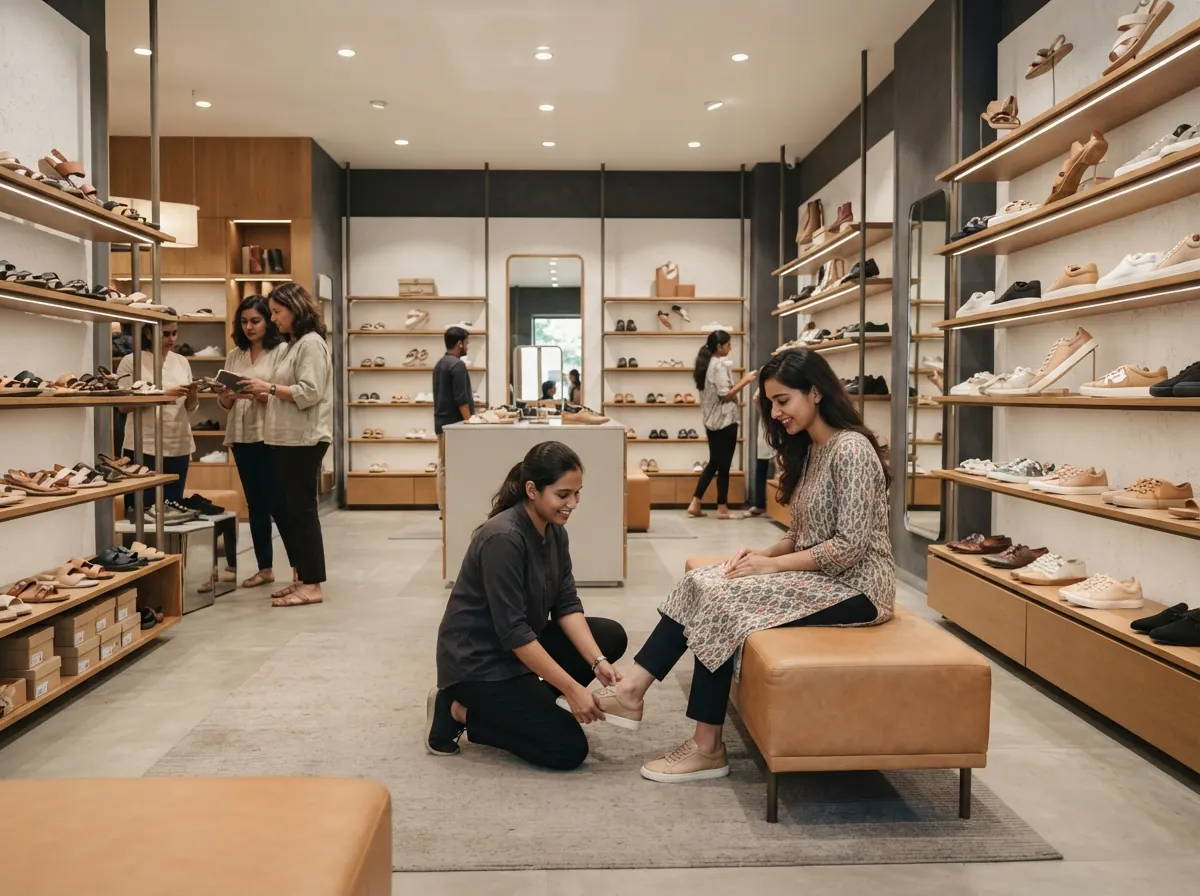
A footwear shop in Uttar Pradesh needs about ₹5.9 lakh–₹39.3 lakh to set up, depending on the format. Run well in a city like Bareilly, it typically nets ₹86,000–₹3.4 lakh a month. The numbers below are India-wide research rescaled to Uttar Pradesh's own wages, shop rents, power tariffs and street prices.
How much investment do you need in Uttar Pradesh?
- Cheapest start

Small multi-brand shop (150–300 sq ft)
Bazaar shop with wall racks, a trial bench and ₹2.5–5 lakh of stock. Owner-run with 0–1 helper.
Setup cost₹5.9 lakhSuggested budget (with working capital): ₹6.6 lakh Mid multi-brand showroom (400–800 sq ft)
Main-market showroom with AC, ₹8–15 lakh of stock across brands, 2–4 salesmen and a godown.
Setup cost₹17.7 lakhSuggested budget (with working capital): ₹18.9 lakh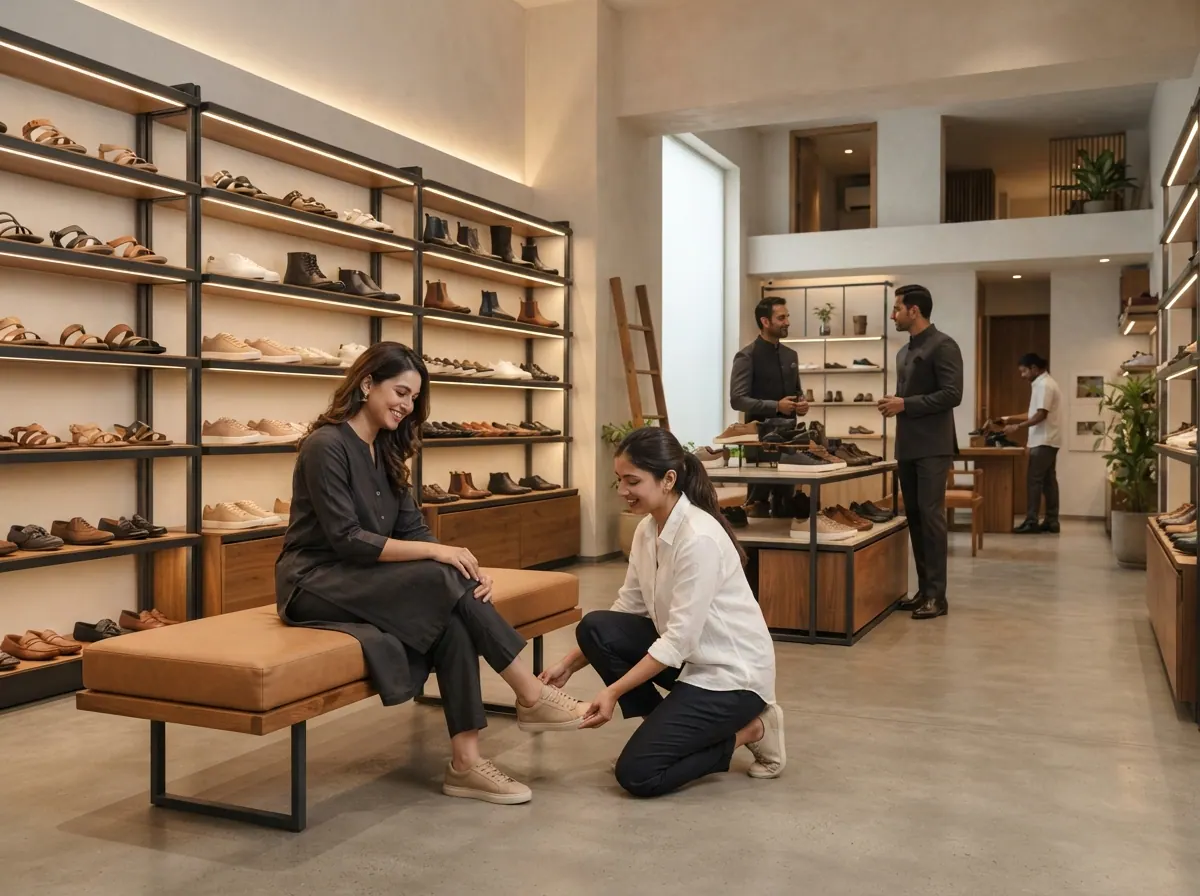
Brand franchise store (1,000–2,000 sq ft)
Single-brand store on a prime corner. Brand fit-out, POS and stock, footfall from the name, but a fixed brand margin and ₹30–50 lakh to start.
Setup cost₹39.3 lakhSuggested budget (with working capital): ₹41.2 lakh
Running this business: the situations you will face
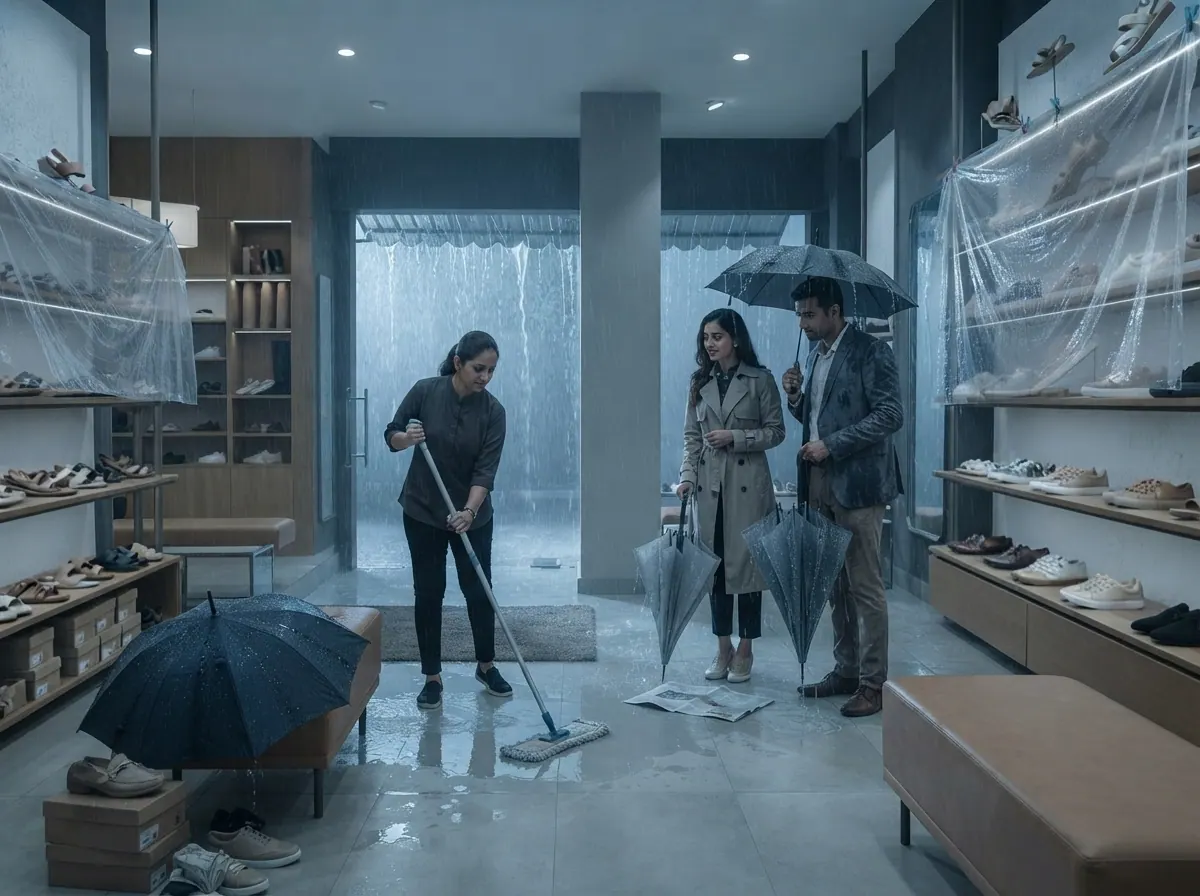
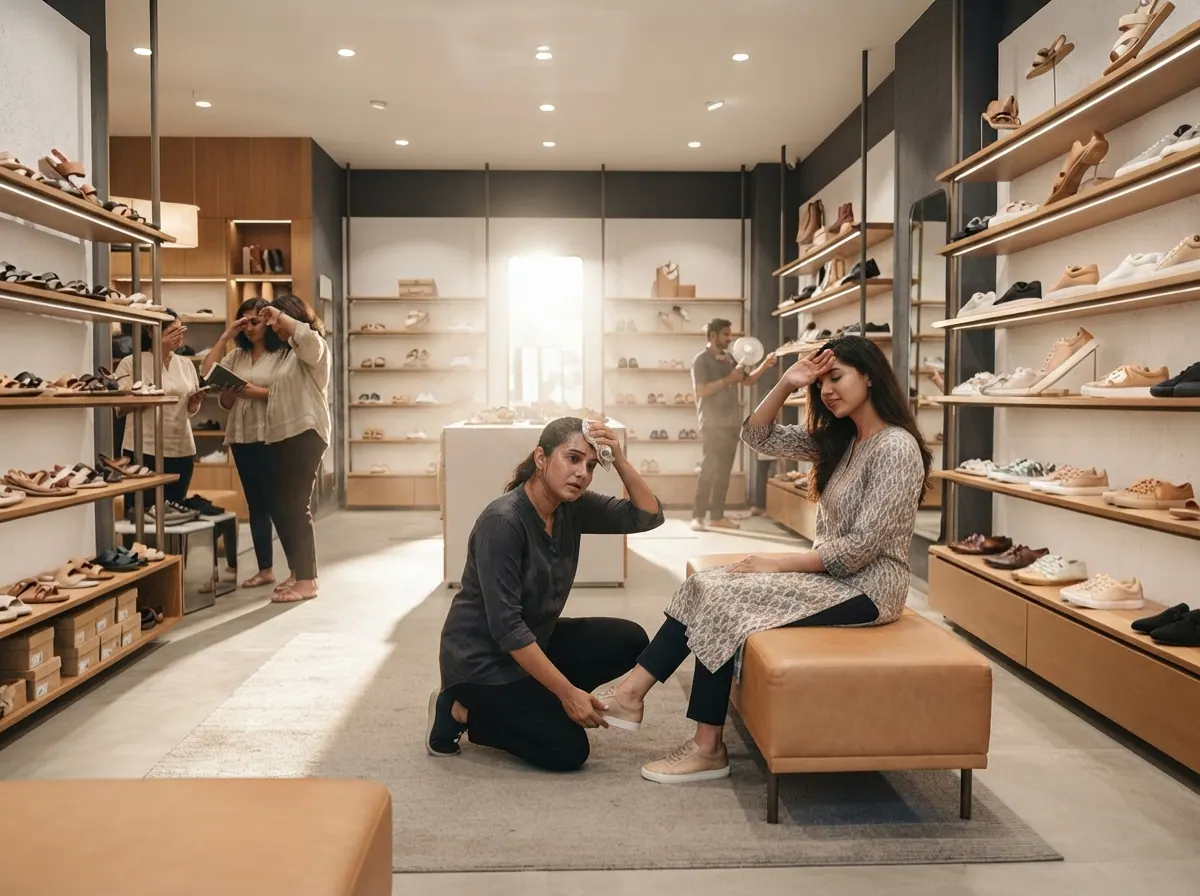
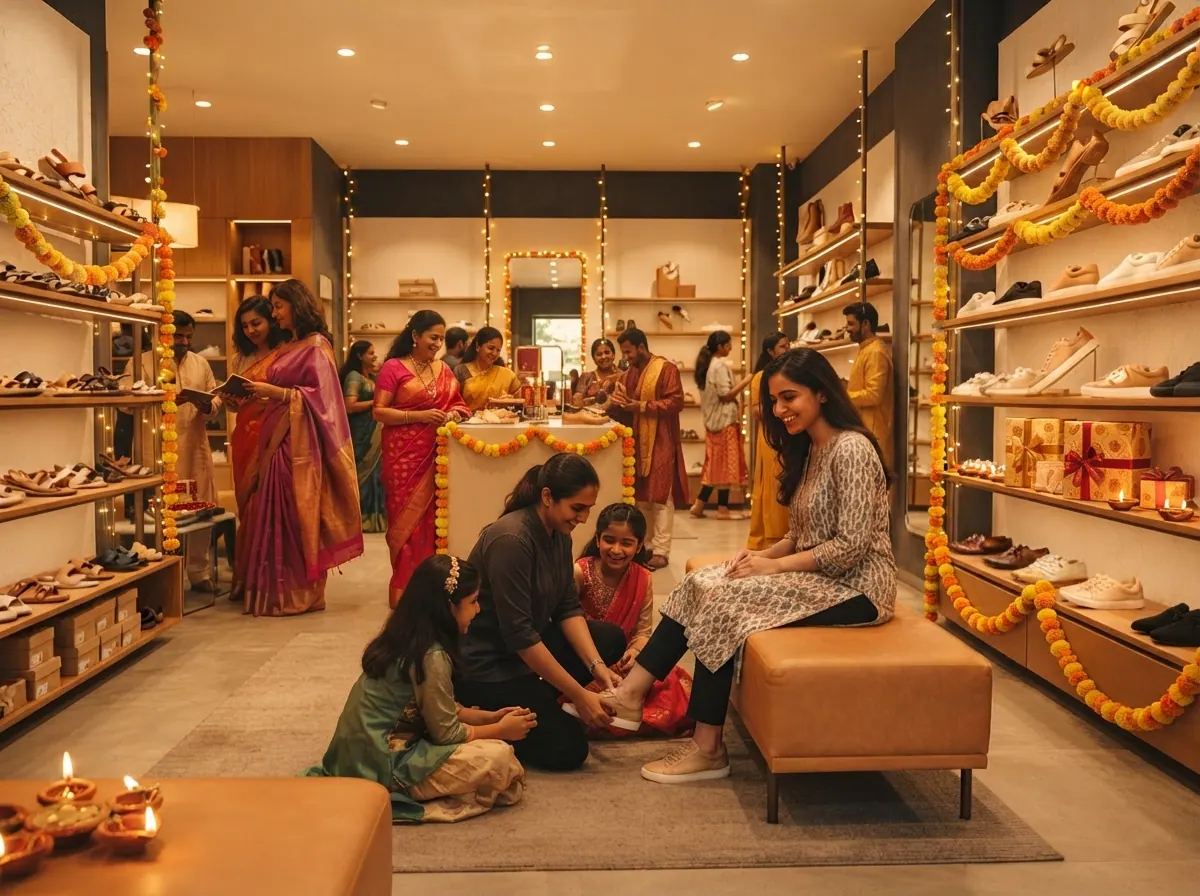
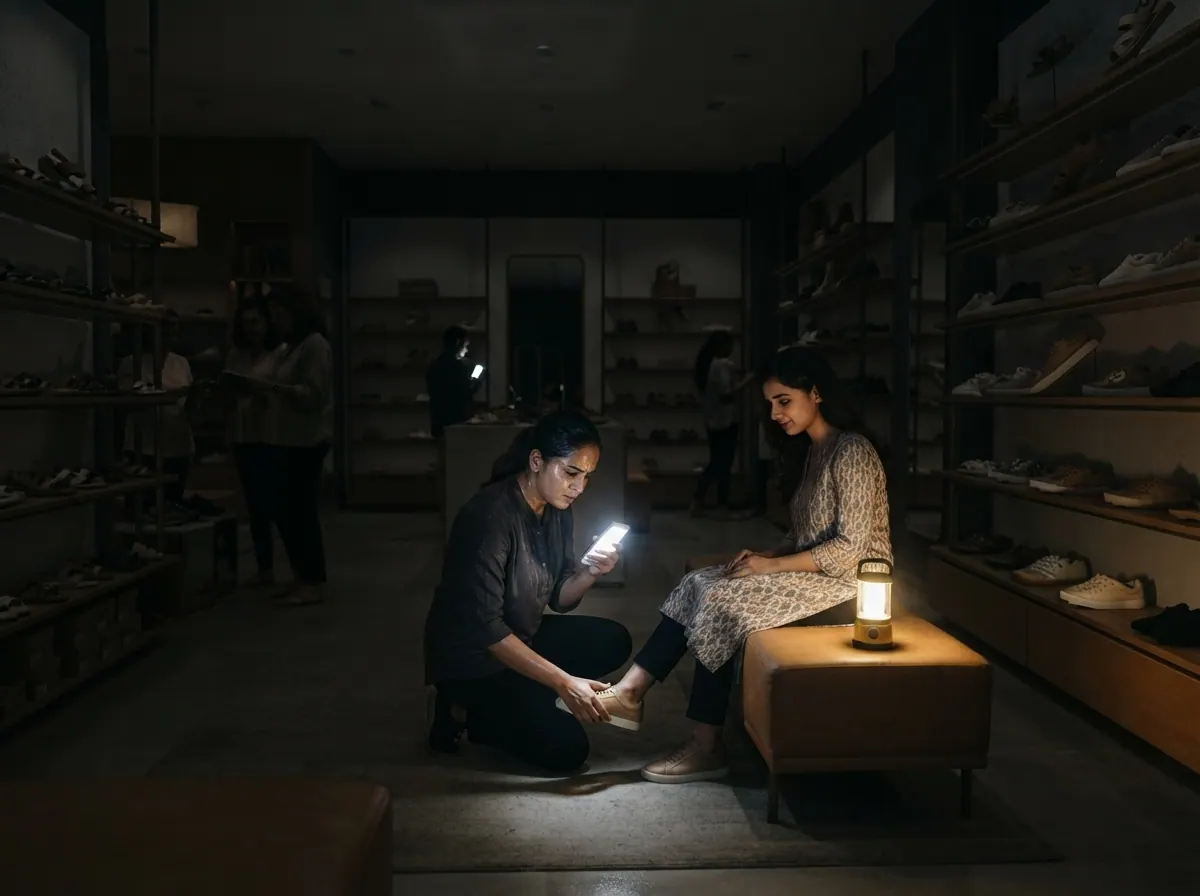
Scenes from the simulator: rush hours, rain, inspections, power cuts, record days.
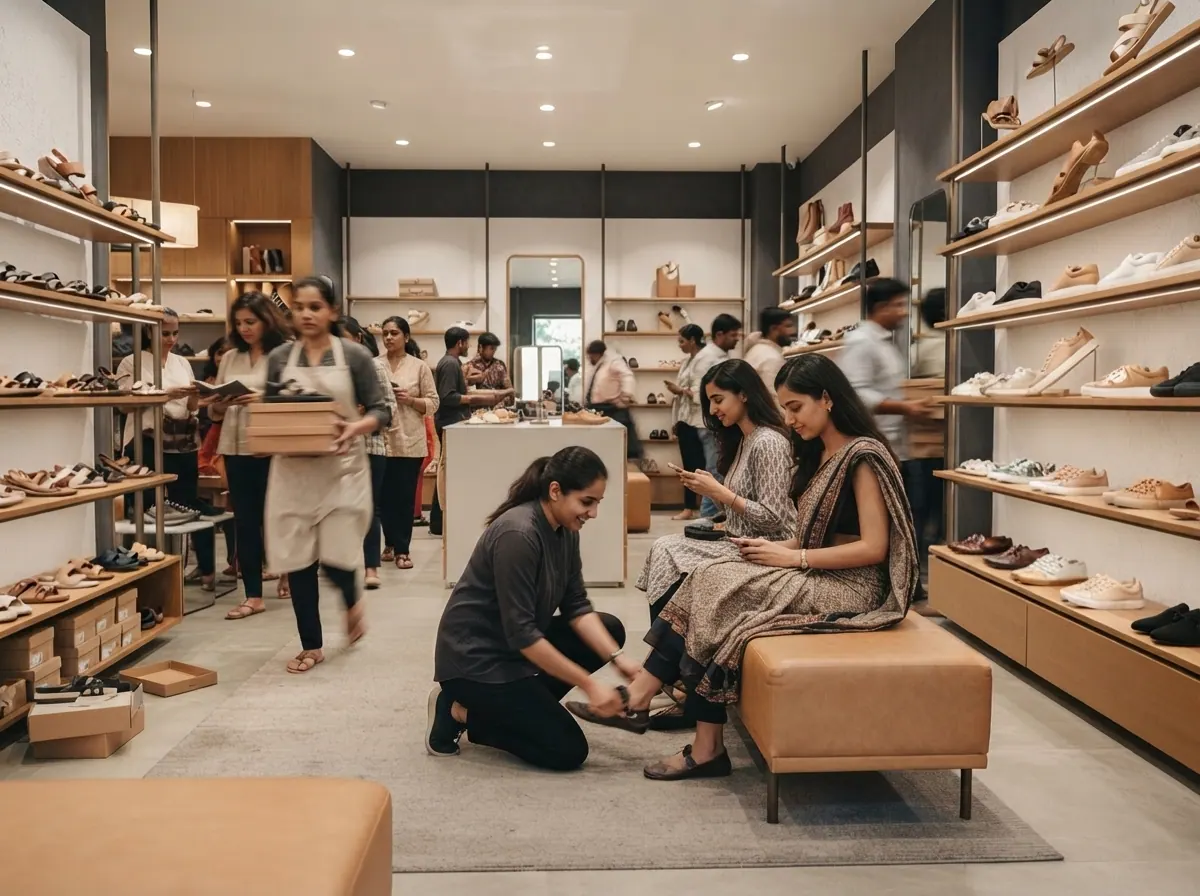
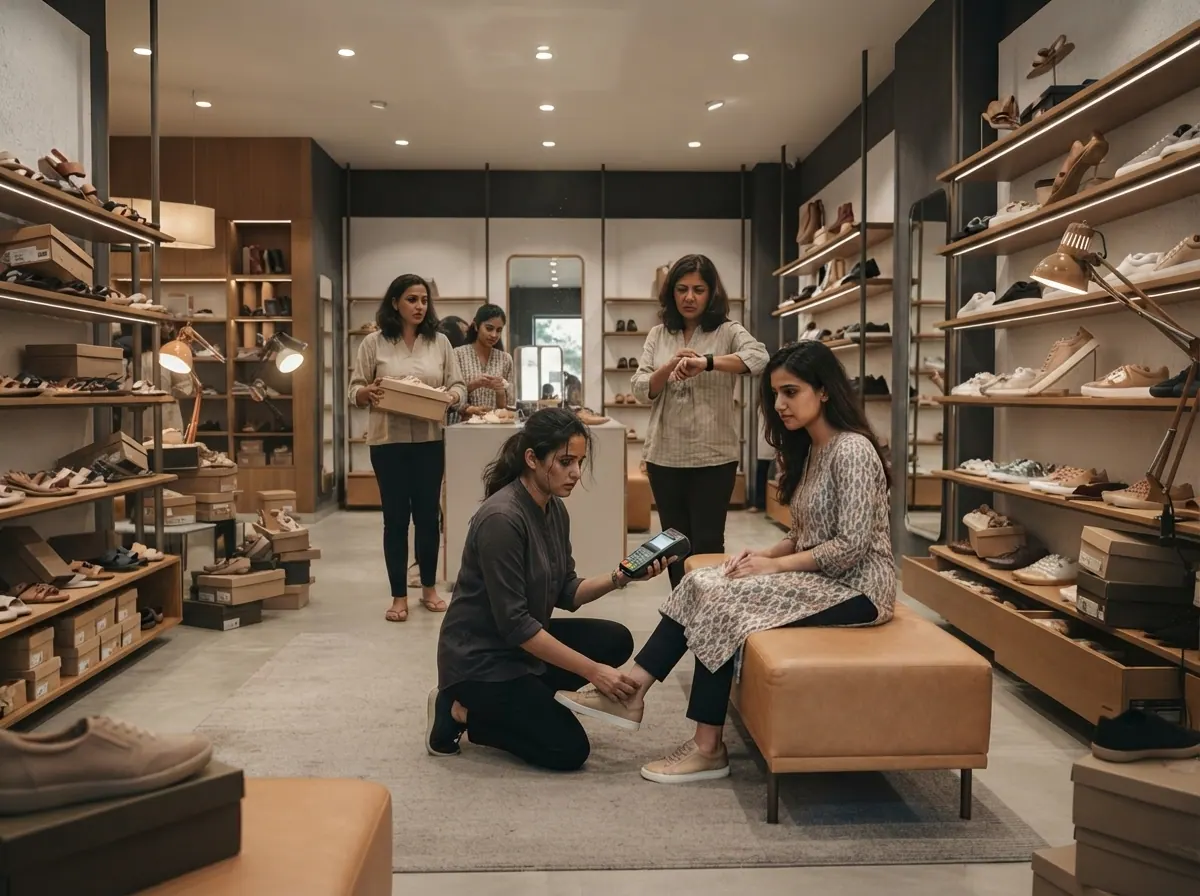
Footwear shop during the peak-hour rush, owner and helper serving a crowd 
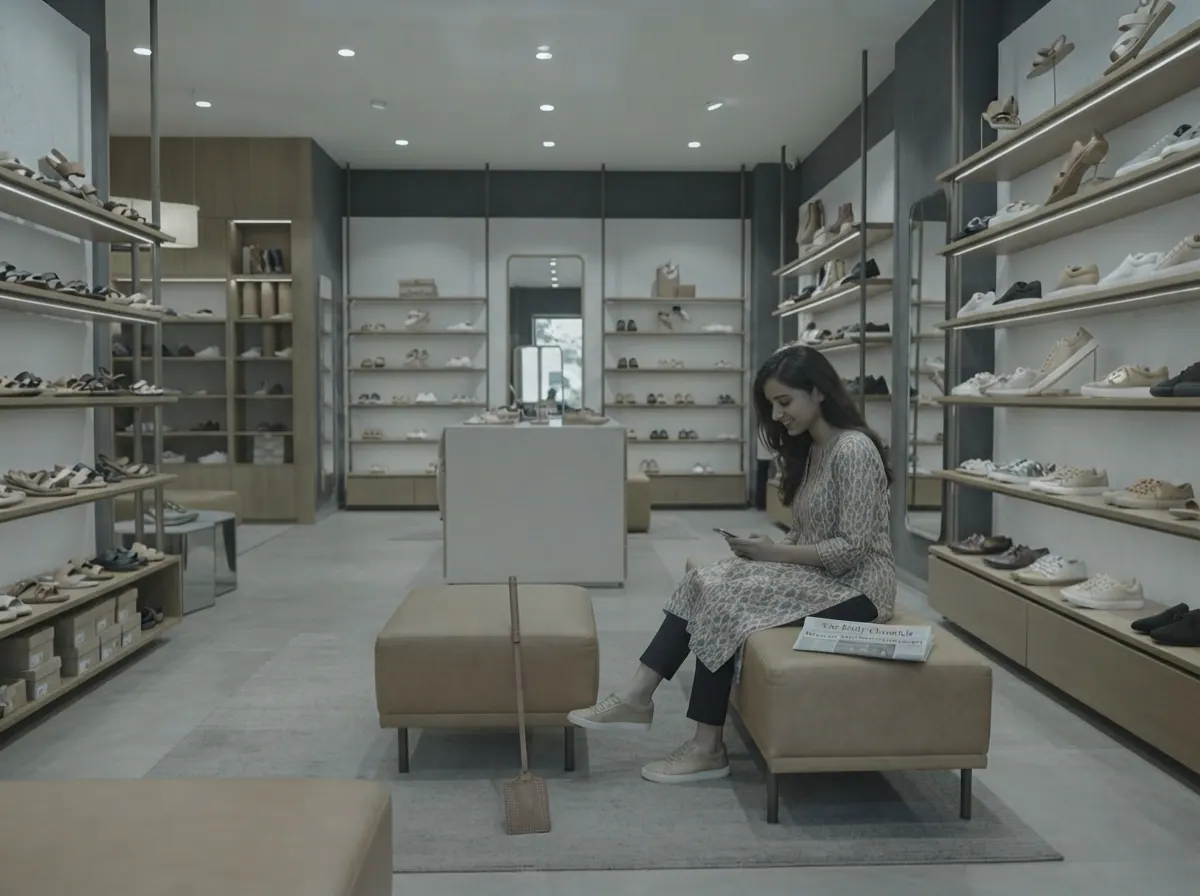
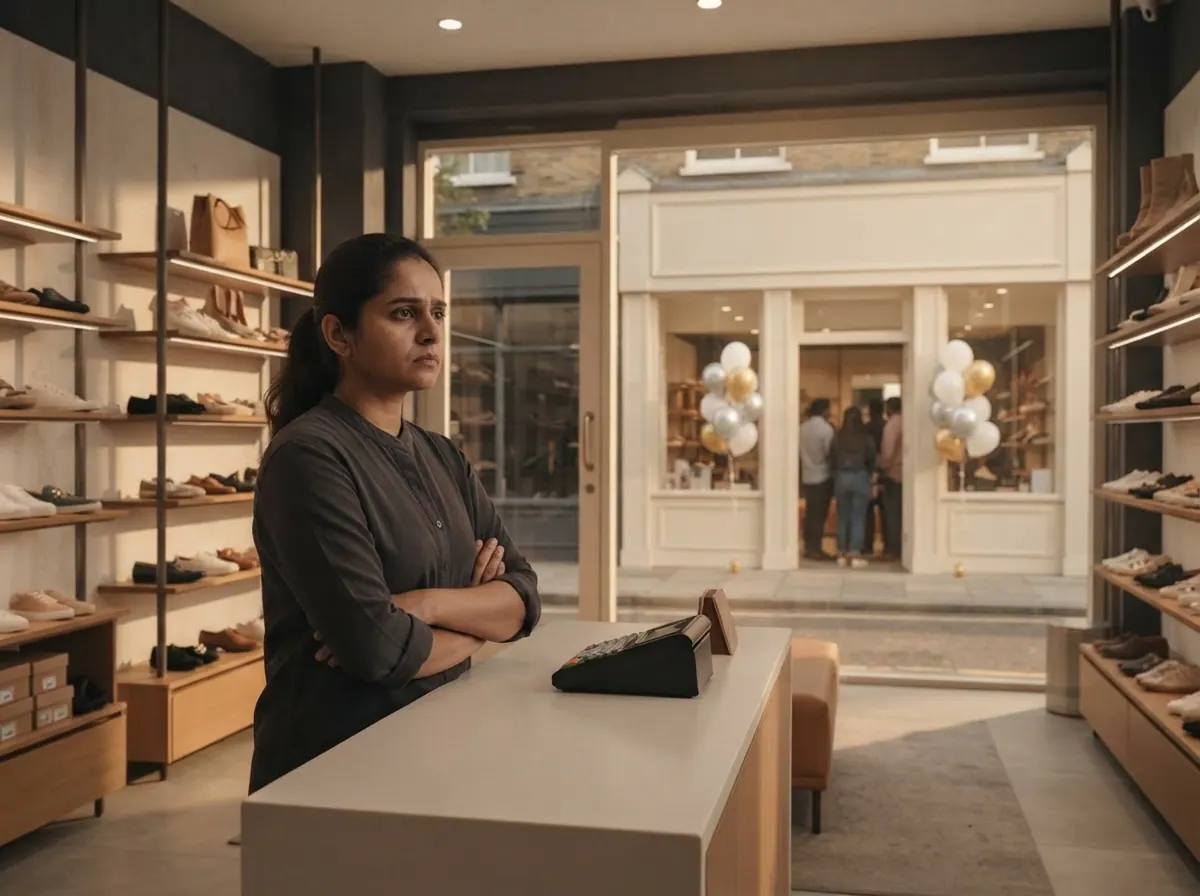
Footwear shop on a slow afternoon with no customers 
Footwear shop in heavy monsoon rain 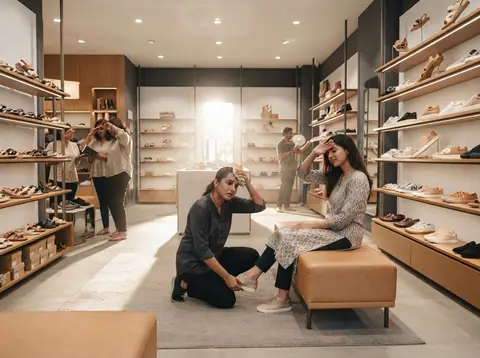
Footwear shop in a summer heatwave 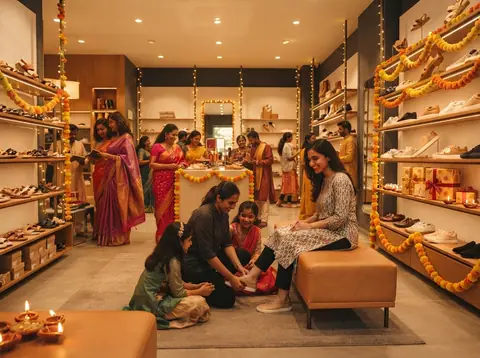
Footwear shop decorated for Diwali with a festive crowd 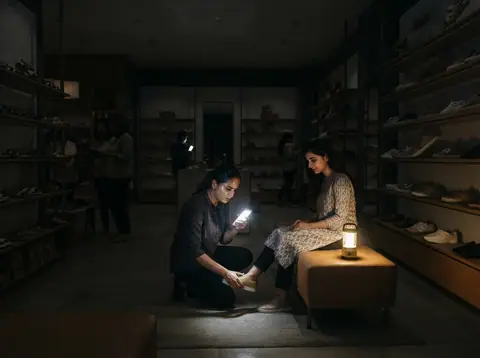
Footwear shop during a power cut at night, lit by a torch 
Footwear shop with a government inspector checking licences 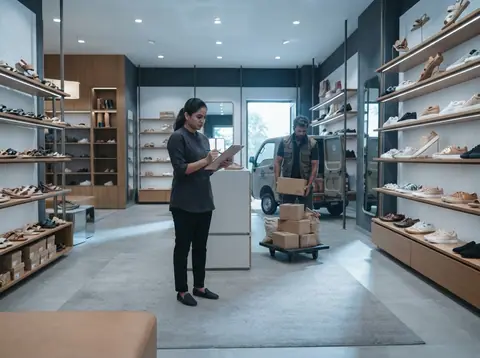
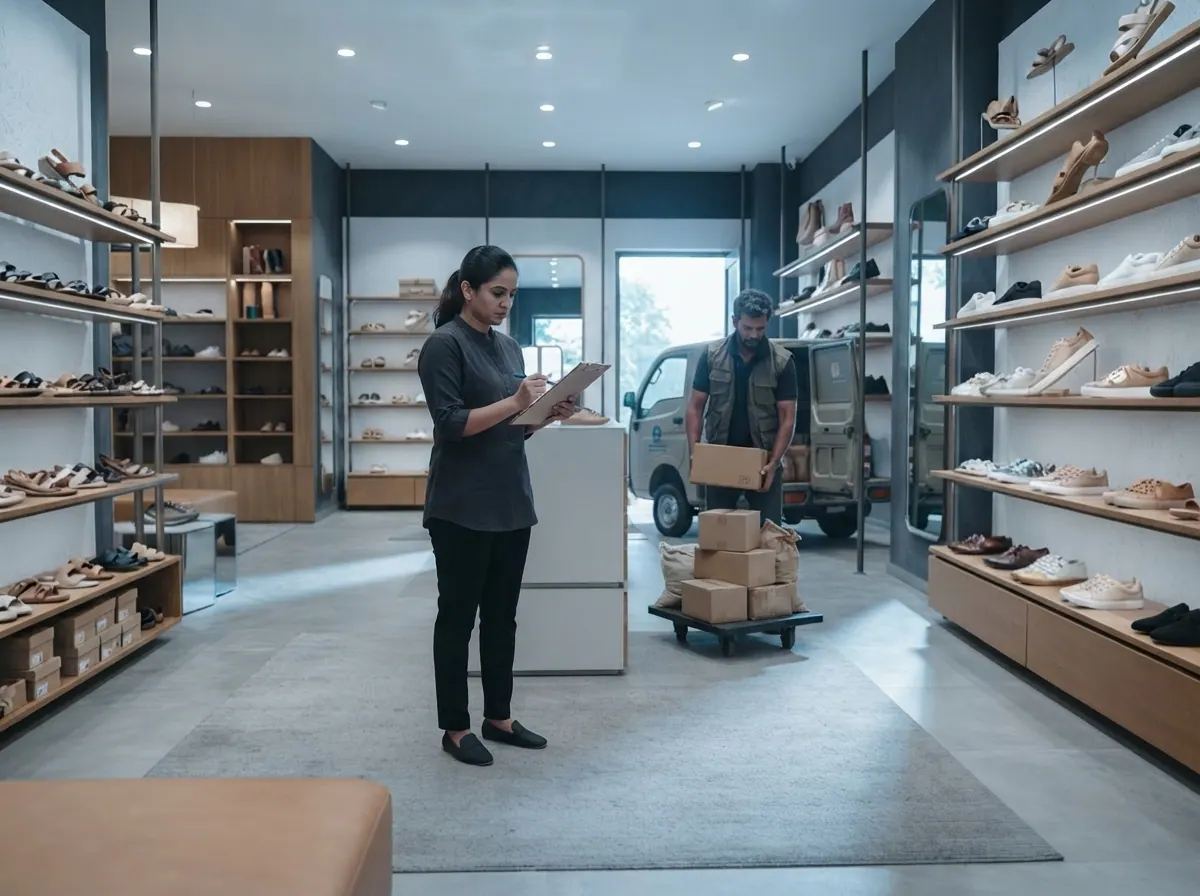
Footwear shop receiving a supplier delivery, owner checking the bill 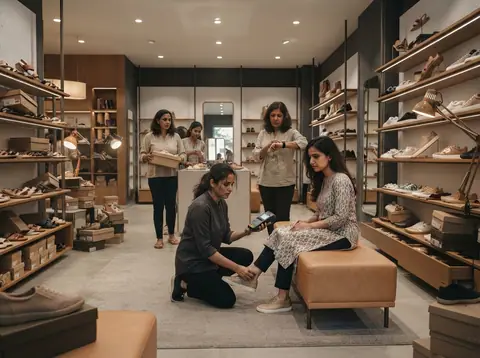
Footwear shop short-staffed, the owner working alone 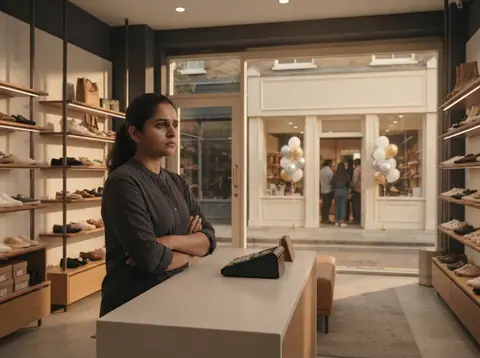
Footwear shop as a new competitor opens nearby 
Footwear shop with a customer asking for credit (udhaar) 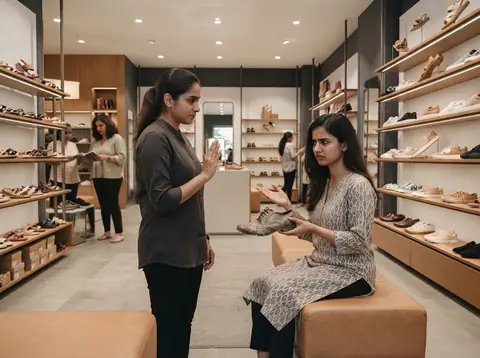
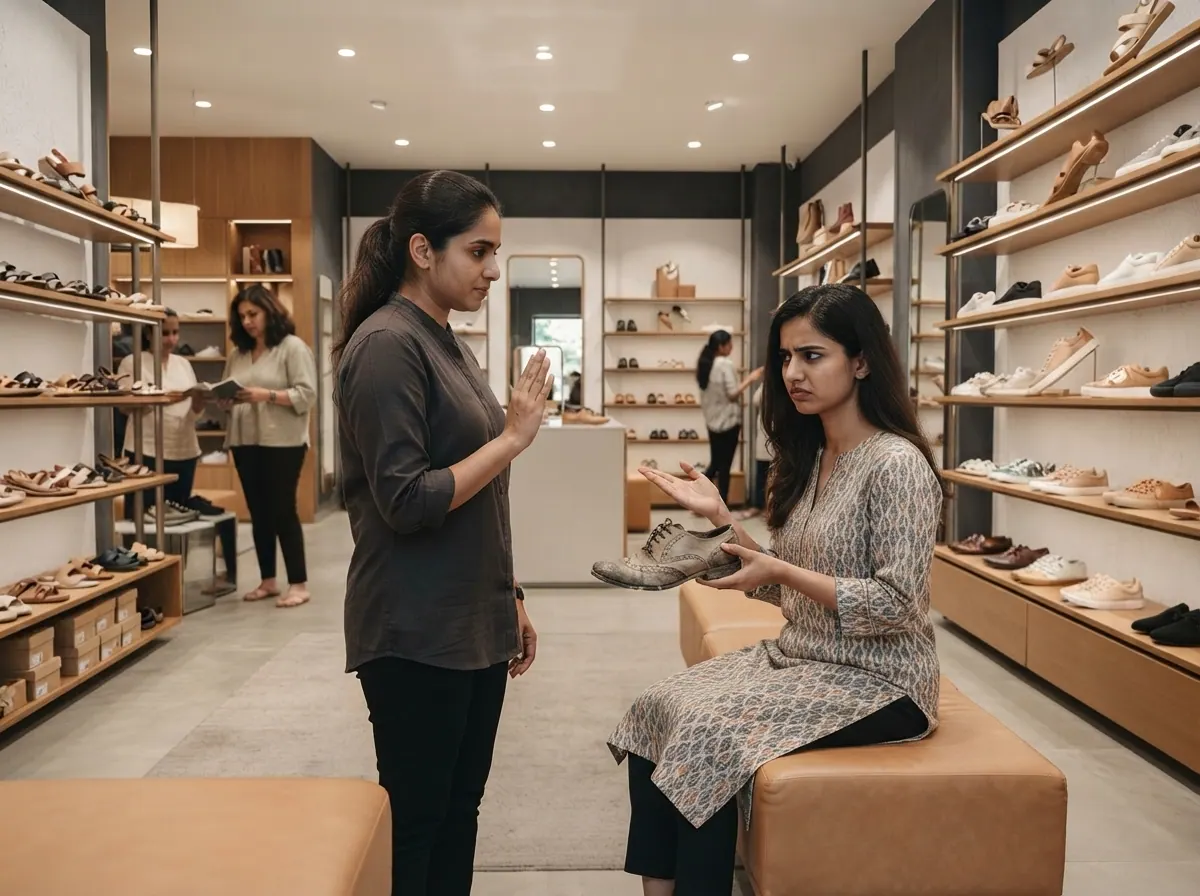
Footwear shop with an unhappy customer complaining 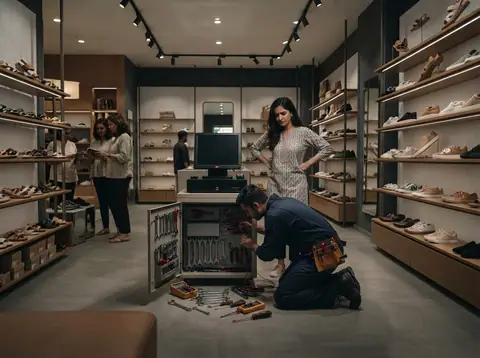
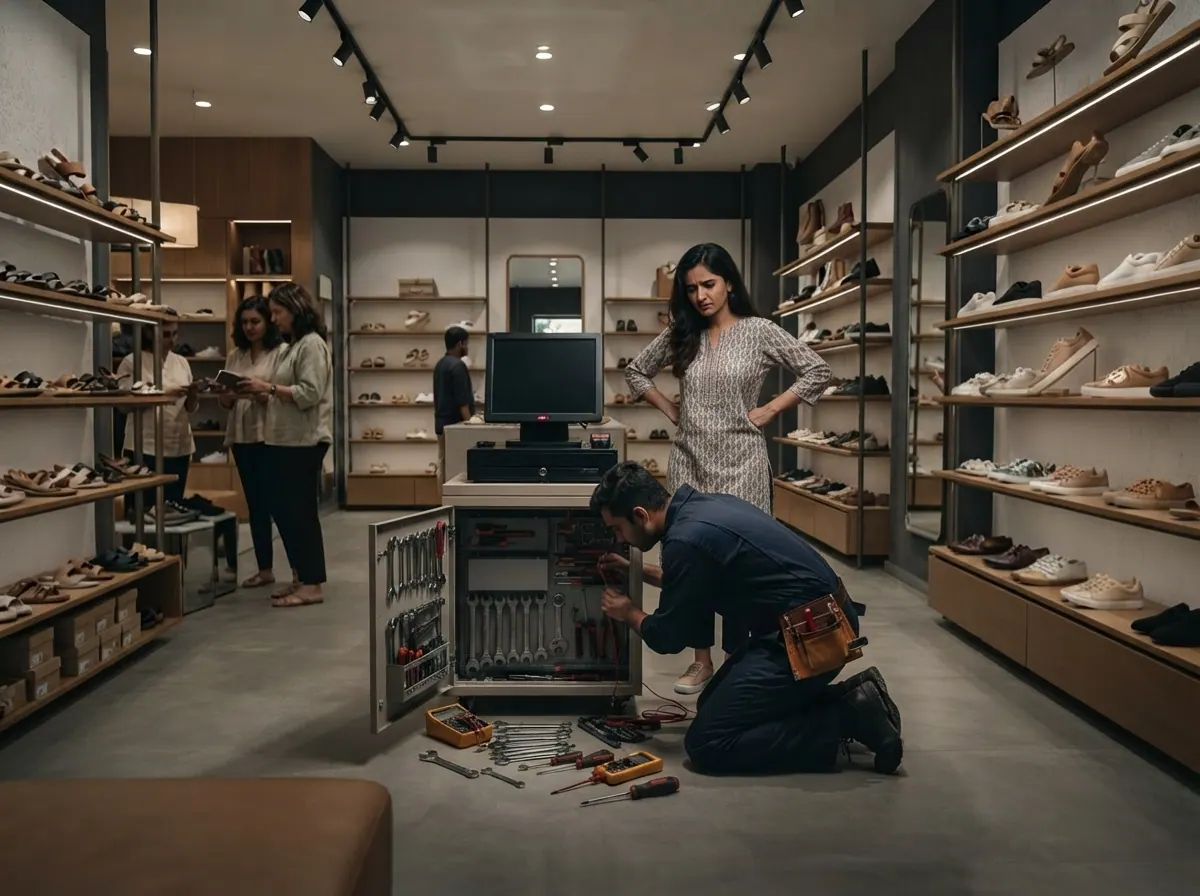
Footwear shop during an equipment breakdown and repair 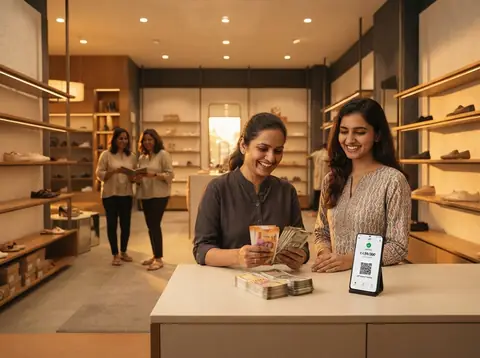
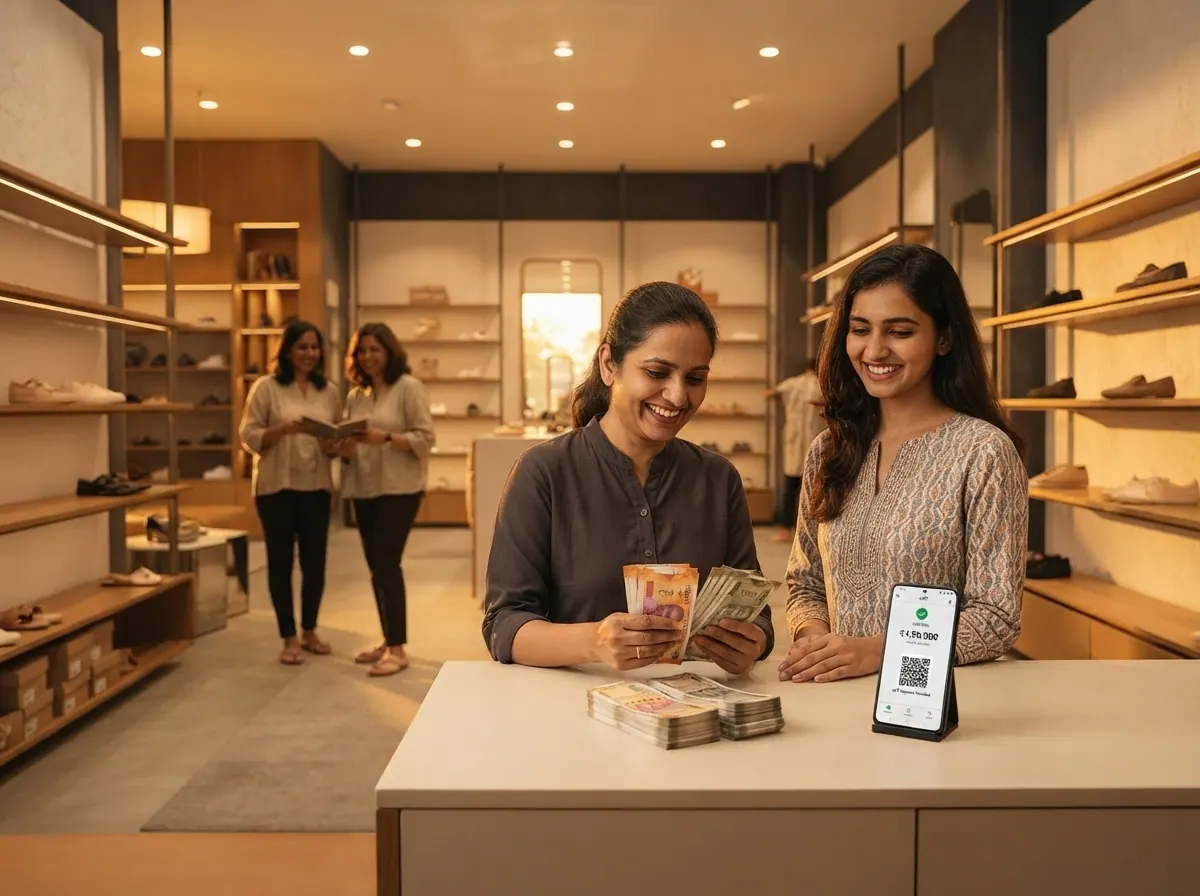
Footwear shop after a record sales day, owner counting cash 
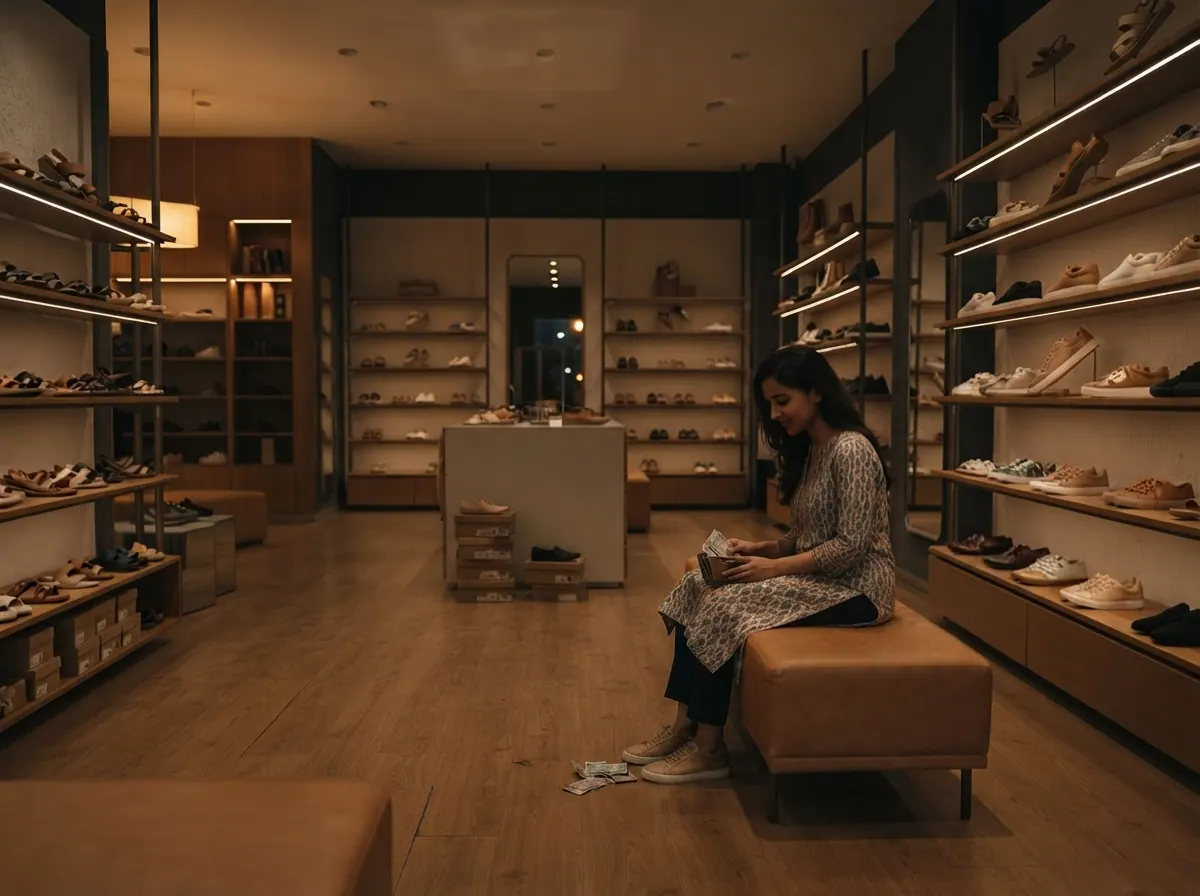
Footwear shop closing after a slow sales day


How to start a footwear shop, step by step
- Choose your format and budget: Start with Small multi-brand shop (150–300 sq ft): about ₹5.9 lakh to set up, or ₹6.6 lakh with working capital.
- Pick the location: Compare the rent with the number of customers who pass by, at the hours you will be open.
- Get your licences: Commonly needed: Shop & Establishment registration, municipal trade licence (renewed yearly), GST registration above ₹40 lakh turnover (composition 1% up to ₹1.5 crore), stock only BIS-marked chappals, sandals and sports shoes (footwear QCOs), MRP, maker and size printed on every box (Legal Metrology). Rules vary by state and city, so confirm with your municipal office.
- Arrange stock, staff and prices: Check local prices first, and keep money aside for the first months of rent, wages and stock.
- Plan for the risks: Watch for: odd sizes from wholesale size sets turning into dead stock, GST jumping from 5% to 18% above ₹2,500 a pair, brand outlets and online sneaker sales pulling customers, seizure of non-BIS stock and monsoon water damage.
- Practise before you invest: Run it day by day in the free simulator to see where the money goes.
How much profit can you make in Uttar Pradesh?
A well-run footwear shop in Uttar Pradesh typically nets ₹86,000–₹3.4 lakh a month in a mid-size city: about ₹66,000–₹5.3 lakh in the metro and ₹31,500–₹1.1 lakh in a small town. A casually run one can make far less or lose money.
| City | Net profit per week | Net profit per month |
|---|---|---|
| Lucknow | ₹15,201–₹1.2 lakh | ₹66,000–₹5.3 lakh |
| Bareilly | ₹19,854–₹79,415 | ₹86,000–₹3.4 lakh |
| Barabanki | ₹7,251–₹25,896 | ₹31,500–₹1.1 lakh |
Ranges are for a well-run business of the typical format in each city size, from public sources and estimates. Your results depend on location and how you run it.
What changes in Uttar Pradesh
The researched local factors that move this business’s numbers.
| Here | India | vs India | |
|---|---|---|---|
| Minimum wage, monthly | ₹13,006 | ₹12,500 | +4% |
| Unskilled day wage | ₹450 | ₹500 | −10% |
| Shop rent, metro (per sq ft/month) | ₹120Estimate | ₹150 | −20% |
| Shop rent, mid-size city | ₹50Estimate | ₹60 | −17% |
| Shop rent, small town | ₹25Estimate | ₹25 | ≈ |
| Commercial power, per kWh | ₹8.4 | ₹9.5 | −12% |
| Commercial LPG cylinder | ₹2,933 | ₹2,810 | +4% |
| Petrol, per litre | ₹102 | ₹102 | ≈ |
| Cup of tea / coffee | ₹10Estimate | ₹12 | −17% |
| Simple meal | ₹80Estimate | ₹80 | ≈ |
| Men's haircut | ₹80Estimate | ₹100 | −20% |
| Milk, 1 litre | ₹58Estimate | ₹60 | −3% |
| Bread loaf | ₹45Estimate | ₹45 | ≈ |
| Factor | Typical value in India | Source |
|---|---|---|
| Minimum wage, unskilled, by city category | Cat I (Noida, Ghaziabad) ₹13,690; Cat II (Lucknow, Kanpur, Bareilly-class cities) ₹13,006; Cat III ₹12,356 per month (from 1 Apr 2026) | employsome.com |
| October 2026 VDA not yet published | April 2026 rates still apply as of mid-Oct 2026 | employsome.com |
| Typical shop helper pay | Lucknow ₹9,000–12,000; Bareilly ₹7,000–10,000; small towns ₹5,000–8,000Estimate | Est.: national presets; UP has a large… |
| Casual daily labour rate (T2) | ₹450/dayEstimate | Est.: RBI Handbook rural non-farm wage… |
| Shop rent by tier | T1 Lucknow (Hazratganj/Aminabad side streets) ₹120; T2 Bareilly ₹50; T3 Barabanki ₹25 per sq ft/monthEstimate | outlookbusiness.com |
| Commercial LPG 19 kg (Lucknow) | ₹2,932.50 (25 Oct 2026); Noida ₹2,810 | goodreturns.in |
| Power cuts outside cities | Rural/T3 roster 18 h supply; summer evening cuts 2–4 h in townsEstimate | Est.: UPPCL supply rosters (urban 24 h… |
| UP Shops & Commercial Establishments Act 1962 registration | Online; fee ₹200–3,000 by headcount; within 30 days; annual renewal (blog) | clearlycomply.org |
| Noida/Ghaziabad follow UP's act, not Delhi's | NCR split | ssrana.in |
| Meat shop licence | Separate municipal + FSSAI licence; unlicensed meat shops closed in 2017 crackdown; no meat sale near places of worshipEstimate | Est.: UP govt 2017 slaughterhouse driv… |
| Professional tax | None in UPEstimate | Est.: UP does not levy professional tax |
| GST thresholds | National: goods ₹40 lakh, services ₹20 lakh | accountune.com |
| Diwali | 8 Nov 2026; Ayodhya Deepotsav draws huge crowds | drikpanchang.com |
| Chhath (east UP) | about 14–15 Nov 2026Estimate | Est.: six days after Diwali |
Festivals and demand
- Karva Chauth (29 Oct 2026) · salon/mehendi and sweets spike 3–5× for women's services; evening eateries busy after moonrise
- Diwali (Dhanteras 6 Nov, Lakshmi Puja 8 Nov, Bhai Dooj 11 Nov) (6–11 Nov 2026) · sweets, gifts, clothing, salon and kirana demand 1.5–3× in the run-up; most small shops shut or half-day on Diwali itself
- Chhath (east UP) (about 14–15 Nov 2026) · puja items and fruit surge
- Magh Mela, Prayagraj (about Jan–6 Mar 2027) · pilgrim food and stall demand
- Holi (about 22 Mar 2027) · colours, sweets, thandai and snacks up the week before; most shops shut on Dhulandi morning
- Eid ul-Fitr (end of Ramzan, Ramzan from about 8 Feb) (about 9–10 Mar 2027 (moon-dependent)) · Ramzan evening iftar trade up for a month; clothing, sewai, meat and sweets demand peaks the week before Eid
Licences and rules
Rules vary by state and city: confirm with your municipal office.
- Shop & Establishment registration
- Municipal trade licence (renewed yearly)
- GST registration above ₹40 lakh turnover (composition 1% up to ₹1.5 crore)
- Stock only BIS-marked chappals, sandals and sports shoes (footwear QCOs)
- MRP, maker and size printed on every box (Legal Metrology)
- Registration under UP Shops & Commercial Establishments Act 1962 · ₹200–3,000 by headcount (blog) · Labour Department, UP
- Meat shop licence (municipal + FSSAI) · varies by ULB (Est.) · Nagar Nigam / FSSAI
Run it day by day before you invest
Run a footwear shop day by day. Choose your city, budget and location, then make the decisions a real owner faces as they come up. Your advisor can test each choice on your next 3 months. The free simulator currently runs on India-wide numbers; a state preset is coming.
Play the simulator freeFrequently asked questions
How much does it cost to start a footwear shop in Uttar Pradesh?
About ₹5.9 lakh–₹39.3 lakh, depending on the format. That is the India-wide setup cost rescaled to Uttar Pradesh's rents and prices.
How much profit does a footwear shop make in Uttar Pradesh?
A well-run one typically nets ₹86,000–₹3.4 lakh a month in a city like Bareilly. Casual owners earn far less.
What licences does a footwear shop need in Uttar Pradesh?
Shop & Establishment registration, Municipal trade licence (renewed yearly), GST registration above ₹40 lakh turnover (composition 1% up to ₹1.5 crore), Stock only BIS-marked chappals, sandals and sports shoes (footwear QCOs), MRP, maker and size printed on every box (Legal Metrology), Registration under UP Shops & Commercial Establishments Act 1962, Meat shop licence (municipal + FSSAI)
Which city in Uttar Pradesh is best for a footwear shop?
Bigger cities bring more customers and higher bills but also higher rent and wages. The chart above compares metro, mid-size city and small town.